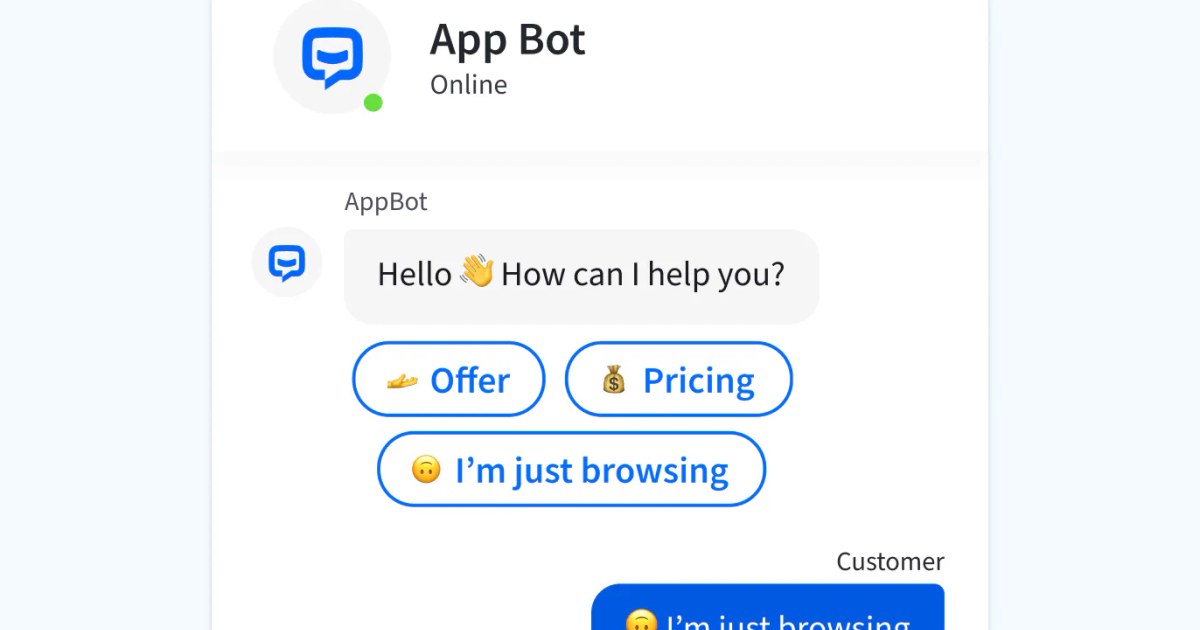
Small business owners do not need more noise. They need tools that actually help them get work done. That is the real difference between a chatbot and an AI agent: a chatbot answers, but an AI agent works.
A chatbot is useful for basic questions. An AI agent can go further by using company knowledge, understanding context, and helping complete real business tasks. For small businesses that need to save time, stay consistent, and move faster, that difference changes everything.
What a Chatbot Does
A chatbot is built to respond. It can answer FAQs, guide users through simple flows, and handle straightforward support requests.
That makes chatbots useful, but limited. They are reactive, which means they wait for someone to ask something before doing anything. They usually rely on fixed scripts or surface-level language patterns, so once the request becomes more specific, their value drops quickly.
What an AI Agent Does
An AI agent is built to work. It can use business context, access company data, and produce useful outputs without needing every step to be manually guided.
That means an AI agent can draft an email reply, suggest a social media post, generate captions and hashtags, help with customer support, or prepare sales follow-ups. Instead of only answering questions, it helps complete tasks that move the business forward.
The Real Difference
The difference between a chatbot and an AI agent is not just technical. It is operational.
A chatbot responds when asked. An AI agent can act with context. A chatbot is good for conversations. An AI agent is better for productivity. A chatbot helps with simple interactions. An AI agent helps businesses work more efficiently every day.
This is why the conversation is shifting from chatbot software to AI employee platforms. Businesses no longer just want answers. They want action.
Why This Matters for Small Businesses
Small business owners often have too much to do and not enough time to do it all. Marketing gets delayed. Customer emails pile up. Social media stays inactive. Follow-ups get forgotten.
This is where AI agents become especially valuable. They do not just sit inside a chat window waiting for questions. They can help prepare content, draft responses, and support daily operations in a way that feels practical and immediate.
For a small business, that means less manual work and more consistency across marketing, sales, and support.
Real Examples of AI Agents in Action
A restaurant that wants to post every day on Instagram does not need a chatbot. It needs an AI social media assistant that can suggest posts, write captions, and generate hashtags based on trends, events, and the restaurant’s own menu or brand style.
An agency that receives too many client emails does not need a generic reply bot. It needs an AI email assistant that can draft clear, relevant responses using the company’s tone, internal knowledge, and past communications.
A small e-commerce business that wants to re-engage prospects does not need a basic chatbot. It needs an AI sales assistant that can help create follow-up messages, identify leads, and support the next step in the sales process.
An artisan who has no time for marketing does not need another conversation tool. It needs an AI productivity assistant that can help plan content, organize ideas, and keep the business visible without adding more work.
Why Context Changes Everything
The most powerful AI agents are not just generative. They are context-aware. That means they can work from real company knowledge, not just from whatever the user types in the moment.
When an AI agent understands the brand, products, customers, goals, and past actions, its output becomes much more useful. It can stay consistent, sound more natural, and avoid generic answers that waste time.
This is what separates a true business AI agent from a simple chatbot interface.
The New Model for AI Employees
Platforms like Unyo are built around this new model. Instead of one generic chatbot, businesses get specialized AI employees for social media, email, sales, support, content, and productivity, all connected to the same company knowledge.
That approach is more practical for small businesses because each agent has a role. One helps with content. Another helps with customer support. Another helps with sales. Together, they act less like a chatbot and more like a real team.
Why Businesses Are Making the Switch
Businesses are moving from chatbots to AI agents because they need more than answers. They need systems that can actually support the daily work of running and growing a company.
A chatbot can reduce support load. An AI agent can help create content, speed up communication, and improve execution across multiple functions. That makes it much more useful for owners who want to do more with fewer resources.
The shift is simple: chatbots respond, but AI agents work.
Conclusion
If your business only needs basic answers, a chatbot may be enough. But if your goal is to save time, stay consistent, and automate real tasks, an AI agent is the stronger choice.
That is why the future of small business productivity is moving beyond chat. The next generation of AI tools is not just about conversations. It is about work.